
Grenada County Arrest Records and Court Charges
An arrest record is the record of the arrest itself. It is made by law enforcement at the moment of custody. The booking process creates it, with the arresting agency, the date, the booking number, and the early list of suspected offenses. In Grenada County, that arresting agency may be the Sheriff's Office, the Grenada Police Department, the Mississippi Highway Patrol, or another agency. An arrest does not prove guilt. It only records that a person was taken in and booked.
The court charge record begins later. After the arrest, a prosecutor reviews the facts and decides the formal charges, then files them with the court clerk. Those filed charges are the charges after arrest, and they are what the court tracks through the case. The two records live in different places. The arrest and booking side belongs to the jail and the agency, and the custody roster is covered on the inmate records page. The charge side belongs to the court. The full case file, with pleas, hearings, and the final outcome, sits on the criminal court records page.
Grenada County does not publish a confirmed official online jail roster or mugshot database in the sources located, so arrest detail often comes from the agency by phone or a public-records request rather than a public blotter.
How Grenada County Charges Get Filed After an Arrest
Walk it forward from the arrest. A person is booked, and the early offenses are noted. The charge record opens when the prosecutor files a charging document with the court. That document names the crime, ties it to a Mississippi statute, and starts the case. Mississippi uses three main charging documents, and the one used depends on how serious the crime is and who files it.
The Grenada Police Department is one of the agencies whose officers begin the process when they make an arrest and submit an affidavit. Its role is described on the city police department page.

Once an officer's affidavit or a prosecutor's filing reaches the clerk, the formal charge record opens and the court takes over tracking.
| Complaint | Information | Indictment | |
|---|---|---|---|
| Filed By | Officer or prosecutor | Prosecutor | Grand jury |
| Common For | Misdemeanors | Some felonies | Serious felonies |
| Starts | The case | The case | The case |
| Court | Municipal or Justice Court | Circuit Court | Circuit Court |
Note: One arrest can produce several charges, so a single booking may turn into a charge list with two or more counts once the prosecutor files.
Grenada County Charge Status and What It Means
Charges are not fixed. They change as a case moves. A prosecutor may amend a charge, reduce it to a lesser offense, add a count, or drop it. A judge may dismiss a charge. The state may end it by nolle prosequi, which is a formal decision not to pursue the charge. Reading the status next to each charge tells you where it stands right now, which matters because the first charge listed is not always the one a case ends on.
| Status | What It Means |
|---|---|
| Pending | The charge is filed and active, with the case still moving through the court. |
| Amended / Reduced | The charge was changed, often to a lesser offense, by the prosecutor or the court. |
| Dismissed | The court ended the charge without a conviction; it may be with or without prejudice. |
| Nolle Prosequi | The state chose not to pursue the charge, ending it at the prosecutor's request. |
How to Find Grenada County Arrest Records and Charges
Filed charges show up in the court case index, not in a public mugshot feed. Felony charges run through Mississippi Electronic Courts, the statewide system known as MEC, with the public side called PAMEC. Grenada County Circuit Court joined MEC on November 23, 2020. City charges sit in Grenada Municipal Court records. Booking and custody detail lives with the jail, so the inmate records page is the place for the roster side.
- Open the MEC pages and choose the Grenada Circuit Court login for a recent felony charge.
- Search by the defendant name or the case number through a PAMEC public-access account or a courthouse terminal.
- Open the case and read the charge list, noting each separate count.
- Check each charge for its statute code, its level, and its current status.
For the arrest and booking side rather than the filed charge, the jail roster channels and agency phone numbers are gathered on the inmate records page. A statewide criminal history check is a separate request handled at the state level.
Charge vs. Conviction
A charge is an accusation. A conviction is a finding of guilt. The gap between them matters. A person can be arrested and charged and still never be convicted, because charges get dropped, dismissed, or lost at trial. An arrest record and a charge record show what was alleged. Only a disposition shows whether the state proved it. Reading either record means reading the outcome, not just the accusation.
| Charge | Conviction | |
|---|---|---|
| Stage | Accusation after arrest | Verdict or guilty plea |
| Burden of Proof | Probable cause | Beyond a reasonable doubt |
| What It Proves | That the state alleges a crime | That a court found the crime proven |
| Public Record | Yes | Yes |
Who Files Charges in Grenada County
The prosecutor decides the charges. For felonies, that is the District Attorney for the Fifth Circuit Court District, which covers Grenada and six neighboring counties. The DA reviews the arrest, decides whether to seek an indictment or file an information, negotiates pleas, and tries cases. Those steps appear as entries in the court charge record. For city offenses, a municipal prosecutor handles the charges in Grenada Municipal Court.
A defendant who cannot afford a lawyer may get appointed counsel, and the Mississippi Office of State Public Defender helps organize that defense.
The state's find a public defender page explains how appointed defense is reached, including efforts to strengthen counsel in rural circuits such as the Fifth.
Grenada County Charge Codes and Severity Levels
Each charge ties to a Mississippi statute. The statute citation is the charge code, and it sets the severity. Felonies are the most serious and route to Circuit Court. Misdemeanors are lower and route to Municipal or Justice Court. A single arrest can produce several charges at different levels, so a record may list a felony count alongside a misdemeanor count from the same incident. Reading the code shows the alleged law, and reading the level shows which court holds the case.
The booking and dispatch side that often precedes a charge runs through county communications. Grenada County's emergency communications structure is described on the Grenada EMA communications page.

Dispatch and the jail are law-enforcement functions, so the data they hold is the arrest side, separate from the filed charge tracked by the court.
Statewide Charge and Criminal History Lookups
County charges roll up into a statewide picture. A single Grenada County case shows the charges filed there, but a full criminal history pulls from across Mississippi. That statewide history is a separate request, handled at the state level rather than by the county clerk, and it follows the Mississippi Public Records Act and the laws that protect certain files. Public charge files are open for inspection unless a specific law restricts them, so a routine charge record can usually be read while sealed or expunged matters cannot.
News coverage can also surface custody and charge events before any court outcome is known. One recent example was a 2026 report involving the Grenada County jail, which underscores that an arrest or booking story is not a finding by any court.
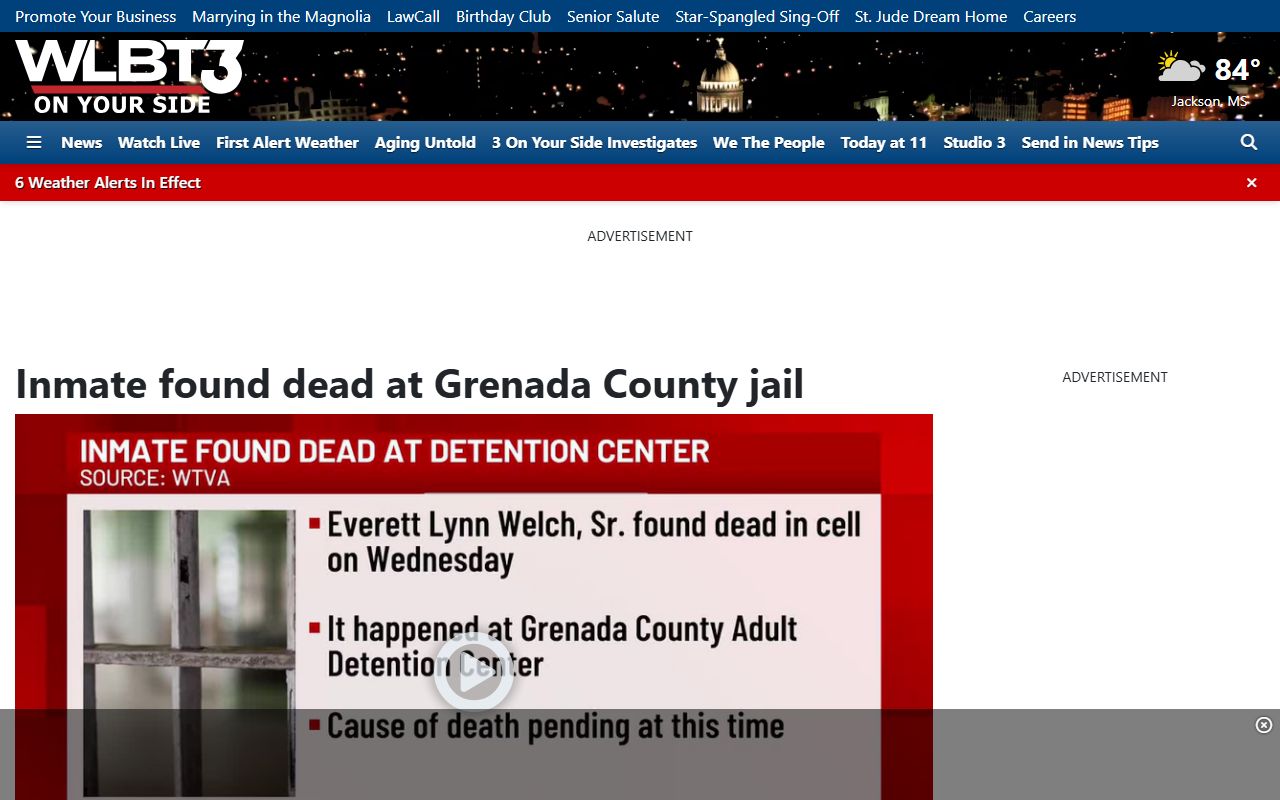
Treat news of an arrest as the start of a process, because the charge record and its outcome are set by the court, not by the headline.
Sealed vs. Expunged Charge Records
Some charge records leave public view. A sealed record still exists in the system but is hidden from the general public. An expunged record is removed from public access in the way the order directs and is treated as if it never existed for most purposes. Mississippi allows eligible expunctions by petition under Miss. Code Ann. section 99-19-71. Dismissed charges, acquittals, and certain first-offender outcomes may qualify, while many convictions and most traffic offenses do not.
| Sealed | Expunged | |
|---|---|---|
| Visibility | Hidden from the public | Removed and treated as never existed |
| Law Enforcement | Limited access remains | Very limited statutory access |
| Eligibility | Set by court order or statute for the case type | Eligible misdemeanors and one nonviolent felony after a waiting period, per section 99-19-71 |
A person seeking relief files a petition in the court that handled the charge, with the arrest, case number, date, agency, and disposition listed. Eligibility is never automatic, so the clerk or an attorney should confirm it.
Restricted Charge Records in Grenada County
Not every charge record is open. Youth Court charges involving children are confidential under Miss. Code Ann. section 43-21-261, and only listed people or a youth-court order can unlock them. Sealed and expunged charges leave public access by order. Charges tied to an ongoing investigation may be held back to protect the case. Personal data such as Social Security numbers, account numbers, and minor identities is redacted from public files.
The safe rule is the same across the county. Charge files are public unless they are sealed, expunged, confidential by statute, restricted by a court order, or redacted for privacy. When a record cannot be found online, the Circuit Clerk counter is the fallback for felony charges, and the city court is the fallback for municipal charges.
Important: Grenada County Court Records is not an FCRA-regulated consumer reporting agency, so its data must not be used to decide credit, employment, housing, or insurance.