
What a Grenada County Court Docket Shows
A docket is the court's official index of a case. It lists each filing, motion, hearing, and order in date order, with a short label for every event. Read top to bottom, the docket tells the story of a case at a glance. It does not contain the full text of each document, but it shows what was filed, when, and by whom, and it points to the order or judgment that closed the matter.
The docket and the full case file are not the same thing. The docket is the table of contents, while the file holds the actual pleadings, exhibits, and signed orders. Most people start with the docket to find a date or confirm a ruling, then request the document only when the full text is needed. A docket also serves different readers in different ways. A party checks it for the next court date, an attorney checks it for filing deadlines, and a member of the public checks it to confirm that a case exists and how it ended. The terms below appear on almost every Grenada County docket.
- Docket
- The dated list of events and filings in a single case.
- Docket entry
- One line that records a filing, hearing, or order on a specific date.
- Continuance
- A postponement that resets a hearing to a later date.
- Disposition
- The current or final outcome of a charge or claim.
- Hearing date
- The scheduled date, time, and courtroom for the next appearance.
Docket vs Full Case Record
The difference between a docket and a full case record decides where you look and what you pay. A docket is a list, often quick to view, while the full record is a stack of documents that may require a fee or a courthouse visit. The comparison below sets the two side by side so the right choice is clear before you start.
| Docket | Full Case Record | |
|---|---|---|
| Format | List of dated entries | Full documents and exhibits |
| Content | Event labels and dates | Pleadings, motions, orders, evidence |
| Access | Often viewable through MEC or at the counter | May require a copy fee or certified copy |
| Use | Track case progress and hearing dates | Legal review and proof of a ruling |
For the underlying documents and a broader view of what a file holds, the court records page walks through case types and request channels.
Courts That Keep Dockets in Grenada County
Three trial courts maintain the dockets most people need in Grenada County. Circuit Court keeps dockets for felony cases, civil lawsuits, and appeals from the lower courts. Chancery Court keeps dockets for divorce, custody, probate, estates, guardianship, and land or equity matters. Grenada Municipal Court keeps a city docket for traffic and ordinance cases that it hears on its weekly session day. Justice Court handles lower-level county matters, but no official Grenada Justice Court docket page was located, so the county phone lines are the safest route there.
Chancery filings have been electronic the longest. The Mississippi Judiciary explains the court's role on its Chancery Court overview.
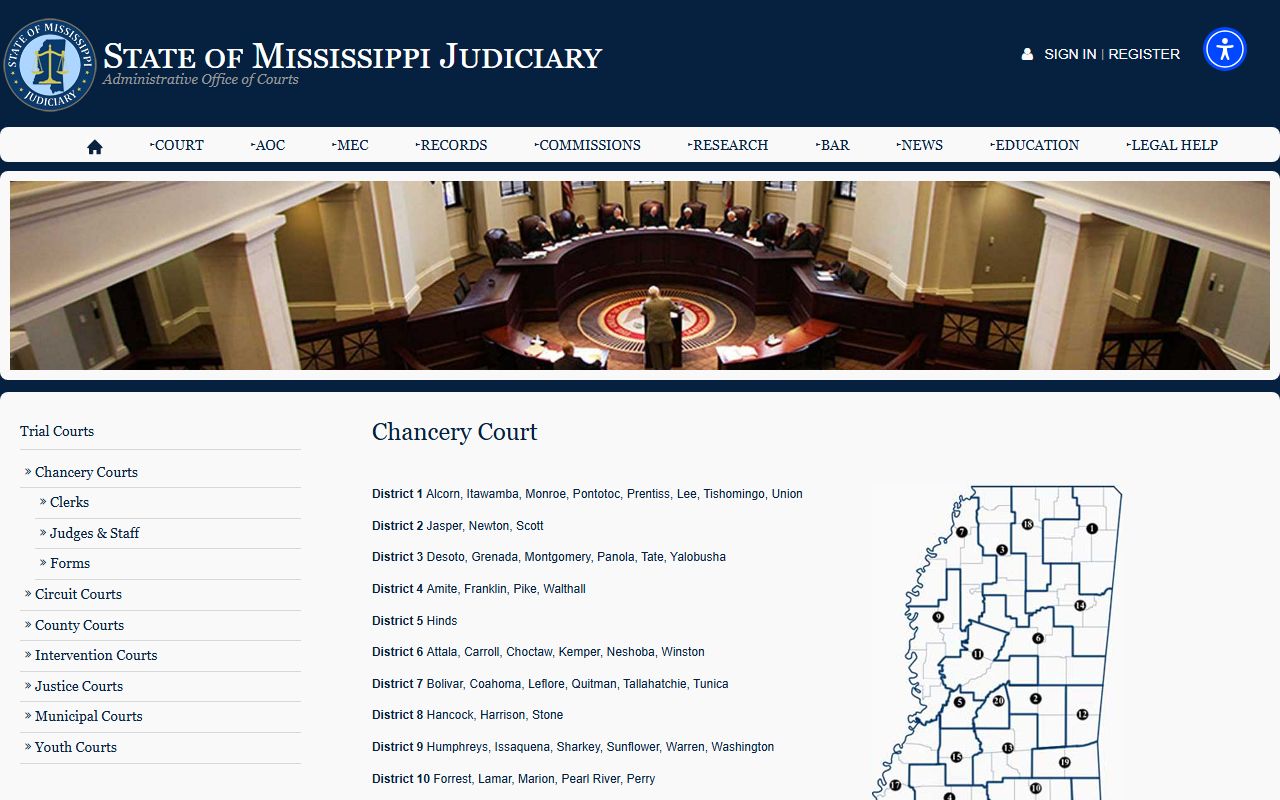
Because mandatory Chancery e-filing began in 2013, many Chancery dockets are indexed in the electronic system, while older files may need the Chancery Clerk. Municipal cases run on a different track. The Mississippi Judiciary describes city court jurisdiction on its Municipal Court overview.
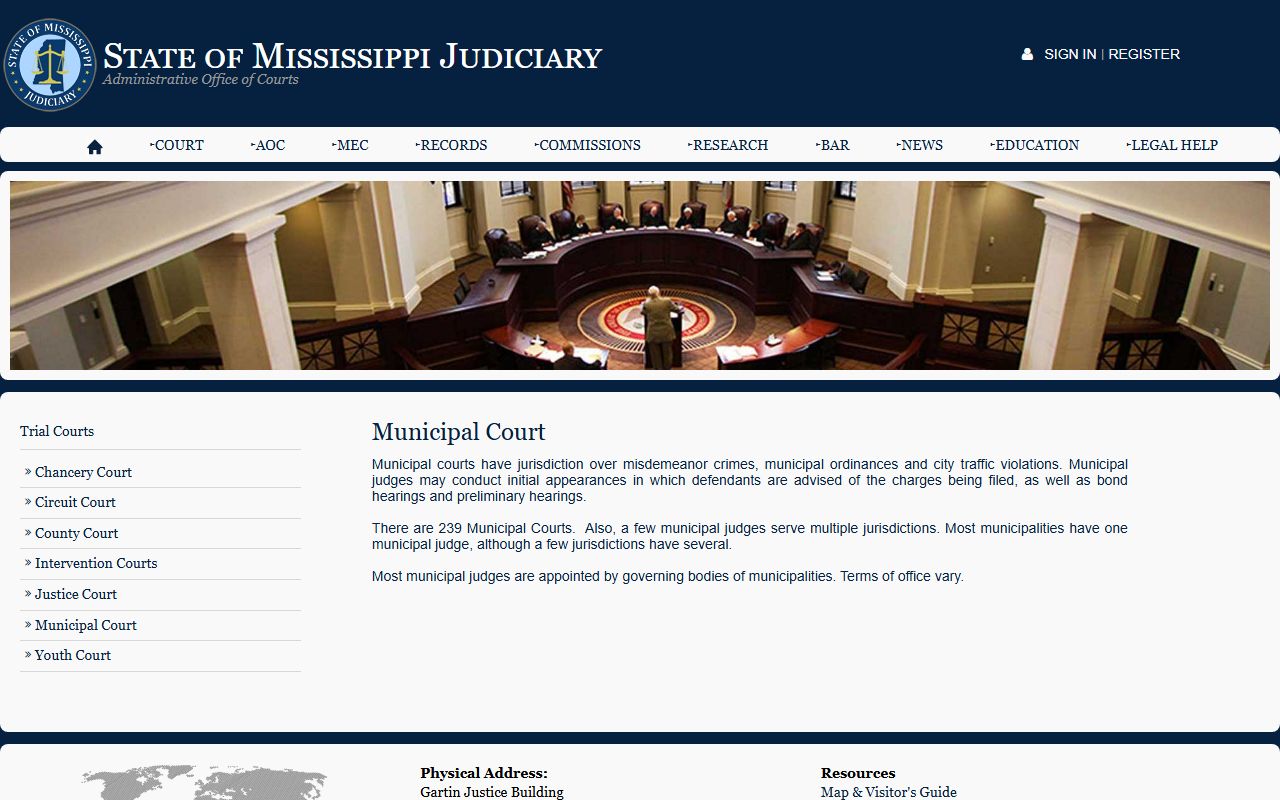
That overview confirms municipal courts handle city ordinances, city traffic, and misdemeanors within city limits, which is why a city ticket appears on the Municipal Court docket rather than in Circuit MEC.
The dates each court joined the electronic system shape how far its dockets reach. Grenada County Chancery Court became a mandatory e-filing court on March 18, 2013, and a later order moved it to a paperless system of court records that same year. Grenada County Circuit Court joined later, with a MEC go-live date of November 23, 2020 for its civil and criminal filings. Mississippi finished its statewide move to electronic filing in 2025. For a docket search, this means Chancery dockets may be indexed online further back than Circuit dockets, while the oldest paper dockets still rest with the clerk.
How to Find Grenada County Dockets Online
For Circuit and Chancery cases, Mississippi Electronic Courts is the main online source. Public remote viewing runs through Public Access MEC, or PAMEC, which is subscriber based. The docket itself sits behind the login, so a public-access account or a courthouse terminal is the practical way in. The steps below outline the path.
- Decide whether the case is Circuit or Chancery, since each court is reached through its own MEC path.
- Open the Mississippi Judiciary MEC page and choose the proper court or login link.
- Sign in through PAMEC, then search by party name or case number.
- Open the case and read the docket entries in date order to find filings, hearings, and orders.
- Without a PAMEC account, call or visit the Circuit or Chancery clerk to use a terminal or pull the file.
Sample Grenada County Docket Entry
Each docket line packs several pieces of data into a short row. Once you know what each field means, the entries read quickly. The inventory below reflects the fields a Grenada County docket entry commonly carries.
| Field | What It Shows |
|---|---|
| Entry Date | The date the filing or event was recorded on the docket. |
| Event Type | The kind of action, such as complaint, indictment, motion, order, or final decree. |
| Filing Party | Who filed the document, such as the plaintiff, the State, the petitioner, or the court. |
| Hearing Detail | Any court date, time, courtroom, judge, or reset tied to the entry. |
| Disposition | An outcome noted on the entry, such as granted, denied, dismissed, or continued. |
| Document Link | A link or reference to the underlying image, viewable for subscribers in MEC. |
Note: redacted items such as Social Security numbers, minor details, and sealed exhibits stay out of public docket views even when the entry is listed.
Hearing Dates and Continuances on Grenada County Dockets
The hearing fields are the part of a docket people check most often. A docket lists the court date, the time, the courtroom, and the assigned judge for the next step in a case. When a hearing moves, the docket records a continuance and shows the reset date, so the newest entry usually carries the date that controls. Reading the entries from the bottom up reveals how a case has been scheduled and rescheduled over time.
Continuances are common and routine. A judge may reset a hearing for more time, for service on a party, for discovery, or at the request of either side. Each reset adds a docket line rather than erasing the old one, which keeps the full timeline visible. Because a date can change without notice to the public, confirming the current setting matters before anyone travels to court. For Circuit and Chancery cases, the electronic docket or the clerk holds the latest date. For city cases, the Municipal Court session calendar controls, and a quick call confirms whether a matter is still set for the next Tuesday.
Grenada Municipal Court Tuesday Docket
The City of Grenada Municipal Court sets its docket around a weekly session. Court sits every Tuesday at 8 a.m., except for a fifth Tuesday in a month. City traffic tickets and city misdemeanors are placed on that Tuesday docket, and although some fines can be paid without appearing, several violations require a mandatory court appearance. The court accepts cash, money orders, cashier's checks, and personal checks from Mississippi residents, and it mentions voluntary payroll deduction or garnishment for unpaid balances. The court line is 662-227-3430.
The city posts court department details on its official site. The City of Grenada lists hours and contacts on its court department page.
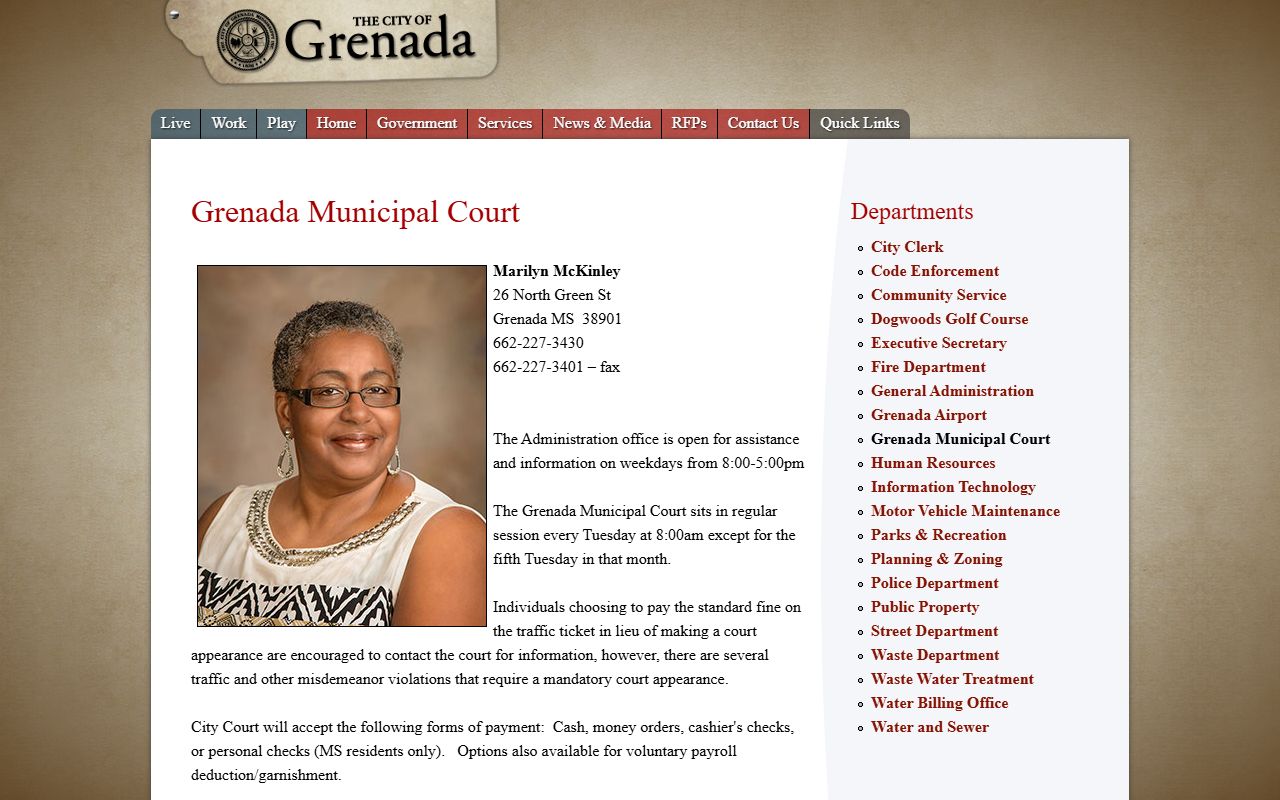
Because the Municipal Court runs locally and not through MEC, a phone call to the court is the fastest way to confirm a Tuesday docket date or a fine balance.
How to Read a Grenada County Docket
Dockets use short labels and abbreviations to save space. Reading them is easier once the common terms are clear. The list below covers entries that show up across Circuit, Chancery, and Municipal dockets.
- Complaint or petition: the first filing that opens a civil, family, or probate case.
- Motion and order: a written request, followed by the judge's ruling on it.
- Continuance: a hearing reset to a later date.
- Capias or failure to appear: a notation tied to a missed court date.
- Judgment, sentence, or final decree: the entry that resolves or closes the case.
Status words tell you where a case stands. Open, pending, disposed, dismissed, and closed describe the stage, while sealed or expunged means the record is restricted from public view. A docket may also show a transfer, a stay, or a case marked inactive, each of which changes what the next entry will be. When the docket is unclear or a document is missing, the clerk can explain whether the file is at a terminal, on paper, or under a court restriction. Not every gap means an error. Sealed family matters, juvenile cases, and expunged charges are removed from public docket views on purpose, so a missing entry can simply reflect a privacy rule. For Circuit and Chancery cases use MEC or the clerk counter; for city tickets call the Municipal Court; and the Circuit Court page explains how a case moves from filing to final order.