
What Probate Covers in Grenada County
Grenada County probate records are Chancery Court records held by the Chancery Clerk. Mississippi gives Chancery Courts jurisdiction over wills, estates, guardianships, and related equity and family matters, so probate is a chancery function rather than a circuit one. The Grenada County Chancery Clerk is Johnny L. Hayward, and the county courthouse sits at 59 Green Street in the City of Grenada, the county seat in north-central Mississippi.
Probate is the court-supervised process of settling what a person leaves behind. The court confirms a will if there is one, names someone to manage the estate, and oversees the payment of debts and the transfer of property to heirs. The same court hears guardianships for minors and conservatorships for adults who cannot manage their own affairs. Each step generates a filing, and those filings become the probate record.
The county sits in the Third Chancery District for chancery matters, and the courthouse in Grenada is where local estate cases are opened. The clerk's office keeps both the modern electronic filings and the older paper estate books. Because probate touches property, money, and family, the court keeps a careful record of every order, and that record is what the public can later request.
The work probate covers in Grenada County includes a wide range of estate and protection matters. The list below groups the main types of filings the Chancery Court produces.
- Wills and petitions to admit a will to probate.
- Estates with a will and estates without one.
- Letters testamentary and letters of administration.
- Inventories, appraisals, creditor notices, and claims.
- Accountings, final distributions, guardianships, and conservatorships.
Grenada County Probate Terms Defined
Probate filings use legal terms that decide who does what in an estate. A quick reference makes a docket or a court order easier to read. The definitions below cover the words seen most often in Grenada County estate and guardianship files.
- Testator
- The person who made the will. After death, the will is the document the court reviews to admit to probate.
- Executor
- The person a will names to carry out its terms, gather assets, pay debts, and distribute what remains.
- Intestate
- Dying without a valid will. The court then appoints an administrator and follows state law to divide the estate.
- Letters testamentary
- The court order that gives an executor legal authority to act for the estate. Letters of administration do the same when there is no will.
- Guardianship
- A court arrangement that places a minor, or that minor's estate, under the care of a responsible adult the court approves.
- Conservatorship
- A court arrangement that lets an appointed person manage the finances or care of an adult who cannot manage alone.
How Probate Works in Grenada County
An estate moves through the Chancery Court in a set order, from the first petition to the final decree that closes the case. Some small estates may qualify for a simpler affidavit process under Mississippi law, but the dollar thresholds and form options were not located on an official Grenada page, so confirm those with the Chancery Clerk or an attorney. The steps below show the usual path.
- Decide whether the estate needs full Chancery Court probate or can use a small-estate or affidavit process under Mississippi law.
- File a petition or application with the Chancery Court through the Chancery Clerk, attaching the will, the death certificate, and heir information as required.
- The chancellor reviews the appointment of an executor or administrator and may issue letters that grant legal authority.
- Required notices are published or served on heirs and creditors as Mississippi law directs.
- The estate representative inventories assets, handles creditor claims, manages property, and files accountings as required.
- A final accounting and distribution closes the estate once the court approves it.
Note: timelines vary with the size of the estate, whether a will is contested, and how quickly creditors and heirs respond to required notices.
How to Search Grenada County Probate Records
There is more than one channel, and the right one depends on the age of the file. Newer Chancery probate filings may appear in Mississippi Electronic Courts, known as MEC, with public remote viewing through Public Access MEC, called PAMEC. That access is subscription based and carries restrictions, so verify what you can view through PAMEC at the time of use. Older estate files predate the system, and those live as paper records at the clerk counter.
For older estate files, certified copies, letters, and any record not online, the Chancery Clerk counter is the best source. The office takes requests in person, by phone at 662-226-1821, and by mail at P.O. Box 1208, Grenada, MS 38902-1208. A written public-records request should name the decedent, give an approximate death date, list an estate or case number if known, and state the copy type you need.
To make any search faster, gather a few details first. Have the decedent's full name, the year of death, and a case number if you have one. The county courthouse profile and local context are summarized in the City of Grenada Census QuickFacts.
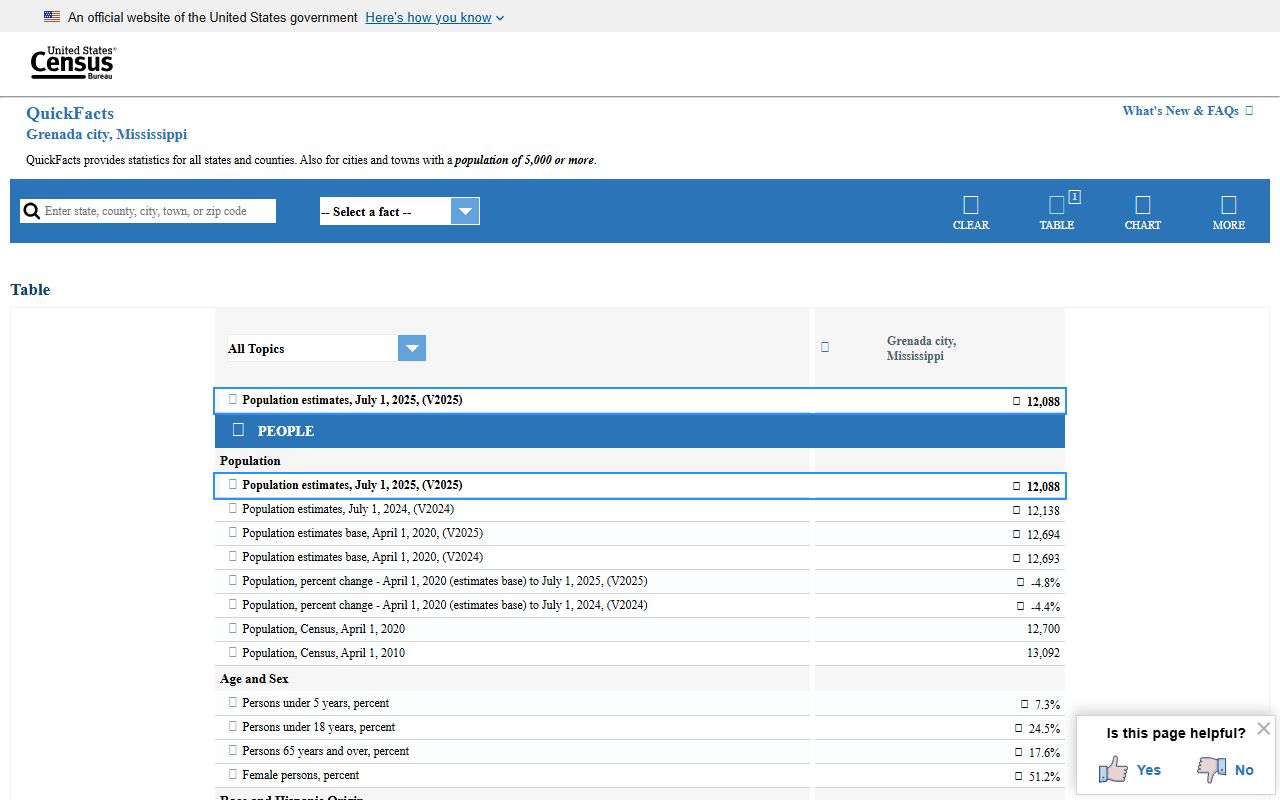
That page gives population and household figures for the city that anchors the county and its courthouse. It sets the scale of the community the Chancery Court serves when estates and guardianships are filed.
Grenada County Chancery Court Contact
Probate runs through the Chancery Court, and the Chancery Clerk keeps the files. That office handles estate petitions, letters, guardianships, and certified copies, and it is the place to call or write for a record not available online. The card below lists the contact details for the office that holds Grenada County probate records.
Grenada County Chancery Court / Chancery Clerk
Johnny L. Hayward, Chancery Clerk
59 Green Street, Suite 1
P.O. Box 1208
Grenada, MS 38902-1208
662-226-1821
Fax: 662-227-2860
Mail goes to the post office box, while in-person visits use the Green Street courthouse address. A call ahead confirms hours and whether an older file must be pulled before you arrive. The Chancery Clerk page covers that office and its full set of duties in more detail.
Grenada County Probate Filing Fees
Probate fees come from the Chancery Clerk, and the exact amounts for Grenada County were not located in official sources. Rather than publish a guess, the table below marks those items with a confirm note. Call the Chancery Clerk for the current filing, copy, and certification charges before you submit a request or a petition.
| Item | Amount |
|---|---|
| Probate filing fee | Confirm with the Chancery Clerk |
| Certified copy of letters or order | Confirm with the Chancery Clerk |
| Plain copy | Confirm with the Chancery Clerk |
| MEC document viewing | Verify through PAMEC at time of use |
Fees can change and may depend on document length or the type of certification, so the clerk's quote at the time of the request is the figure to rely on.
What Grenada County Probate Records Show
An estate file collects every step of the case, from the opening petition through the final decree. No official sample Grenada probate file was viewable without MEC access, so the fields below reflect what an estate record commonly holds. They give a sense of what to look for in a docket or a paper file.
| Field | What It Shows |
|---|---|
| Estate style and number | The case caption and the court-assigned identifier for the estate. |
| Decedent | The person whose estate is being settled, with the filing date of the case. |
| Petitioner and attorney | The party who opened the estate and the lawyer of record, if any. |
| Chancellor | The judge assigned to review and approve estate actions. |
| Will admitted | Whether a will was admitted to probate, or the estate proceeds without one. |
| Personal representative | The executor or administrator named, plus any bond and the letters issued. |
| Inventory and claims | The asset inventory, creditor notice dates, and claims filed against the estate. |
| Orders and accounting | Court orders, accountings, the final decree, and document images where posted. |
| Sealed or redacted exhibits | Material removed from public view, such as protected medical or minor details. |
If you also need a marriage or divorce record tied to the same family, the marriage and divorce records page explains where those files live.
Restricted Probate Records in Grenada County
Most estate cases are open, but some probate matters carry protections. Guardianship and conservatorship records can include medical, financial, minor, or incapacity information that is sealed or redacted. The court limits who may see that material to protect the people it serves.
Other files stay closed by statute. Mental-health treatment records are confidential under Section 41-21-97 and are released only on narrow grounds. Adoption files are confidential under Section 93-17-25 and should not be grouped with ordinary estate access, since they require a court order with good cause. When a record is restricted, the clerk releases only what the law allows, and a court order may be needed for the rest.
Note: Guardianship, conservatorship, mental-health, and adoption files are handled under stricter rules than a routine estate, so expect redaction or a court order.